In India's remote Arunachal Pradesh, vote-buying is an open secret as national election nears its end
Street performers, analysts and voters in the Himalayan state describe how cash and gifts are routinely traded for votes, even as India's election commission reports seizing more than a billion dollars in suspected inducements.
By Juan Gonzalez ·
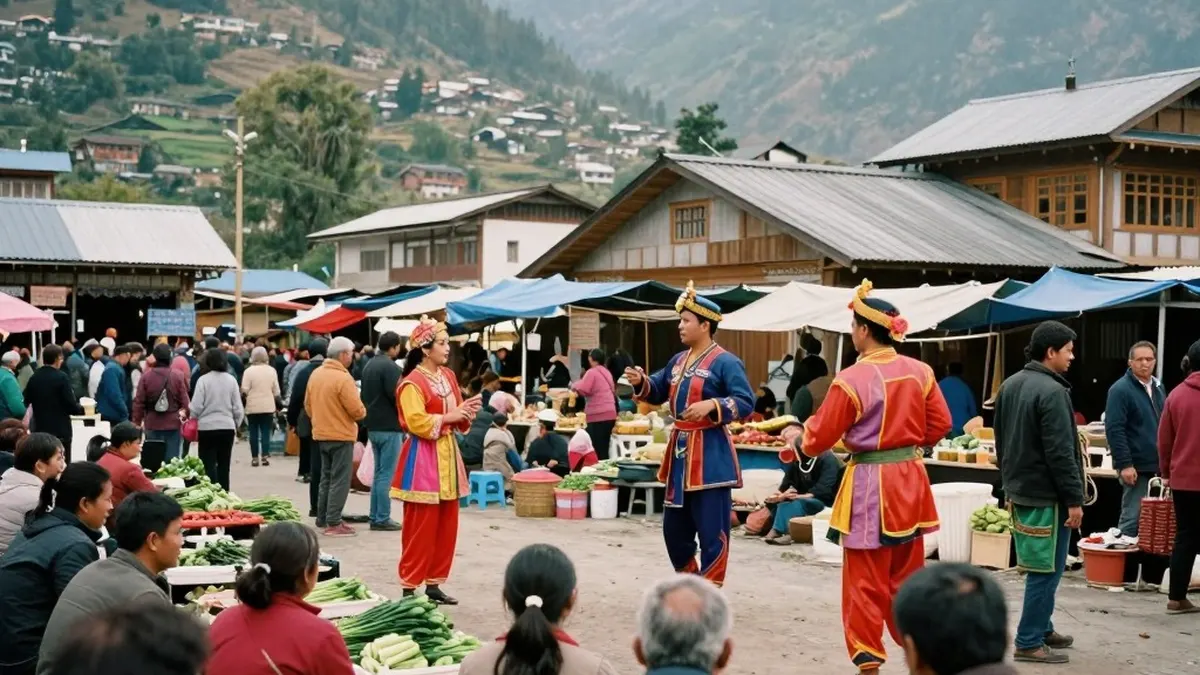
In a crowded marketplace in Itanagar, the capital of Arunachal Pradesh, a group of actors sings to morning shoppers about the arrival of elections. "Give me a drink, take my vote," goes the refrain, which also mentions cars and cash. The audience laughs, nods and films the performance. In this remote northeastern Indian state, trading money and gifts for votes is widely treated as an open secret.
The actors belong to an independent local theater troupe that wants voters to choose candidates based on their promises and performance rather than on bribes. Actor Ravi Tayem said the group performs in markets, villages, temples and shopping centers. "Our message is: don't sell your vote for money," he said, arguing that winners try to recoup what they spent once in power and do not spend it on voters.
The issue arises as India's national elections, spread over six weeks and involving nearly a billion eligible voters choosing more than 540 parliamentarians, approach their conclusion. Voting began in April, and results are due on June 4. Prime Minister Narendra Modi, who leads the Hindu nationalist Bharatiya Janata Party and has held office for a decade, is widely expected to win a third term.
Bribing voters is illegal, but India's election commission says it seized more than a billion dollars' worth of cash and other suspected inducements between mid-March and mid-May. The items included food, alcohol, jewelry, drugs and other "freebies." Milan Vaishnav, a Washington-based expert on India's political economy, compares the practice to a poker game in which candidates treat bribes as the cost of getting a hand, with no guarantee of victory.
It is unclear how many voters are actually swayed. The latest large-scale survey, conducted six years ago by the New Delhi-based Association for Democratic Reforms, found that 41% of respondents considered material inducements, such as cash, liquor and gifts, an important factor in their choice. Watchdogs say the commission rarely pursues prosecutions. After the 2019 elections, it told the Supreme Court, according to the Times of India, that it had returned most seized money and goods to their owners and had begun prosecution in only three cases. It also published daily seizure lists in 2019 but has stopped doing so this year. The commission did not respond to NPR's requests for comment. Trilochan Sastry, a founder-member of the Association for Democratic Reforms, said the reluctance to prosecute tells parties: "Keep doing this."
Analysts say bribery is easier to carry out in far-flung places such as Arunachal Pradesh, which borders Bhutan, Myanmar and China and has about 1.5 million people living mostly in villages. Nani Bath, a political scientist at Rajiv Gandhi University, said that makes voters easy to identify and contact. The state voted on April 19, holding national and state elections together. Bath said voters can expect the equivalent of up to $2,500 each, roughly a year's average earnings there, and that the ruling BJP, India's richest party, has an advantage.
Cynicism is common. At a BJP rally outside the capital, state leaders promised to rid the state of corruption, but construction worker Chukhu Hollo was unconvinced. "All elected leaders buy votes — even children know that," he said. He described party workers calling families to see whether they would negotiate, followed by a meeting with snacks and drinks, and then agreement on an amount.
No party admits to offering bribes, and the BJP urged people this year not to accept inducements. However, a former senior BJP leader in the state, whom NPR did not name so he could speak freely, said the party had in the past offered cash, favors and gifts for votes, and that he helped arrange them. He denied bribing anyone, calling it "help" such as paying medical bills. He said he recouped his expenses through contract work from politicians he helped elect. State vice president Tarh Tarak said the party condemns inducements and that "anyone saying otherwise is making false allegations."
Voter Sunny Kotin said life in the area is tough and some residents lack electricity. He said offers rise as voting day nears and that even people who initially refuse change their minds. "It's just too tempting," he said.
Source: KJZZ